Defcon Unveils Open-Source Security Key Badge Designed by 'bunnie' Huang
Hardware hacker Andrew 'bunnie' Huang has designed a new open-source security key badge for the annual Defcon conference, shifting focus toward internal chip security and hardware transparency.
Language:ENAR
AI-generated summary based on reports from arstechnica.comInstaBriefs does not carry out original reporting. Every fact below is traceable to the sources listed with this story.
30-second brief
Defcon has revealed its new conference badge designed by hardware hacker Andrew 'bunnie' Huang. The badge features an open-source security chip aimed at improving hardware transparency and trust.
One-minute read
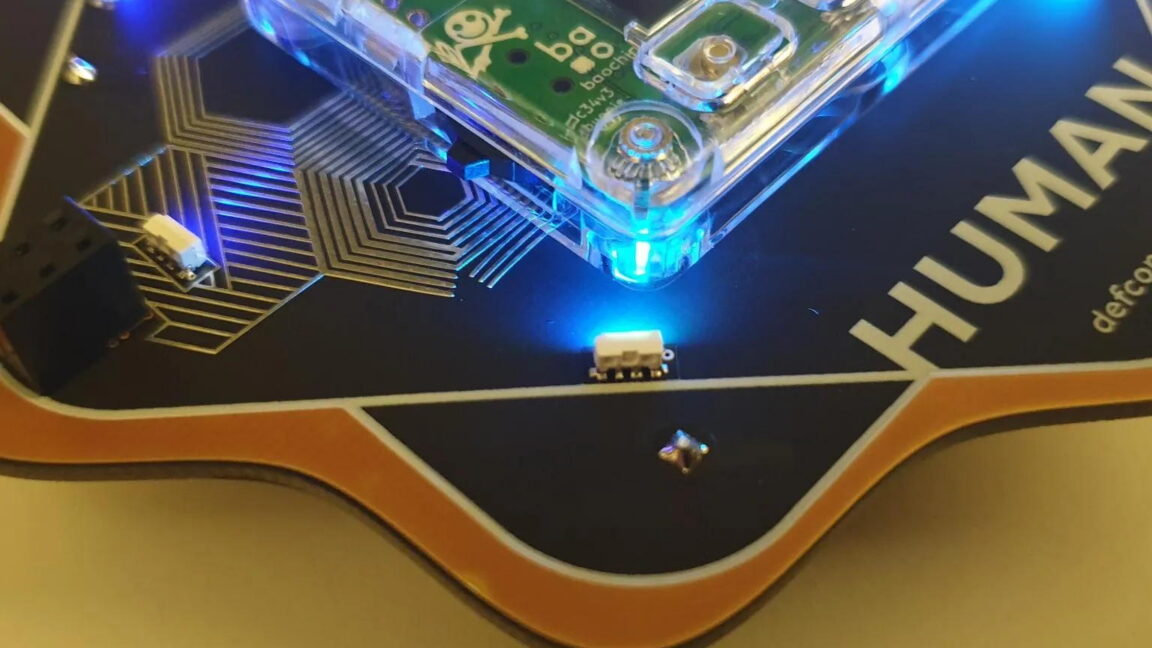
The Defcon hacker conference has unveiled its latest official attendee badge, created by hardware hacker Andrew 'bunnie' Huang. While previous Defcon badges focused on elaborate external puzzles and cryptographic challenges, this year's badge highlights open-source hardware security. The device incorporates a custom open-source chip designed by Huang to advance computing transparency and trustworthiness, allowing users to inspect the internal security mechanics directly.
Why this matters
Hardware security transparency is critical for verifying that electronic devices and security keys have not been tampered with or designed with hidden backdoors.
Background
Defcon badges are famous in the hacker community for being custom electronic devices packed with puzzles, mini-games, and technical challenges built specifically for conference attendees.
Structured analysis built only from the verified reports behind this story.
AI analysis based on reports from arstechnica.com. Not original reporting.
Key facts
- The Defcon hacker conference has unveiled its latest official attendee badge, created by hardware hacker Andrew 'bunnie' Huang.
- While previous Defcon badges focused on elaborate external puzzles and cryptographic challenges, this year's badge highlights open-source hardware security.
- The device incorporates a custom open-source chip designed by Huang to advance computing transparency and trustworthiness, allowing users to inspect the internal security mechanics directly.
The annual Defcon hacker conference is widely known for providing attendees with elaborately designed electronic badges. In past years, these badges have featured intricate puzzles, complex cryptographic challenges, hidden Easter eggs, and even mechanical gear trains.
For this year's event, conference organizers commissioned renowned hardware hacker Andrew "bunnie" Huang to create the official badges. Unlike previous iterations that focused primarily on aesthetic badge design and complex puzzles, this year's design shifts focus toward the hardware inside.
Huang's design features an innovative open-source chip created to advance transparency, security, and trustworthiness in computing systems. The new hardware allows users to inspect its internal security key mechanics directly.
Source attribution
Reported by 1 verified source· 1 verified outlet
Every brief lists the reporting it was written from.
- First published
- 1 Aug, 10:05
- Latest update
- 1 Aug, 10:05
- Confidence
- Medium
Based on how many independent verified outlets reported this story and whether their accounts agree.
- arstechnica.com
Verified outlet
Story timeline
How this story developed, oldest report first.
Defcon Unveils Open-Source Security Key Badge Designed by 'bunnie' Huang
arstechnica.com
arstechnica.com
Tags
Defcon · cybersecurity · hardware · open-source
This brief was written by AI from reported sources and reviewed against our editorial policy.
Related briefs

Horizon3 Reaches $2 Billion Valuation After $250 Million Series E Round
Cybersecurity startup Horizon3 secured $250 million in Series E funding at a $2 billion valuation, driven by enterprise demand for continuous AI-powered security validation over traditional annual penetration testing.

Visa Acquires Cybersecurity Firm BioCatch in $2.4 Billion Deal
Visa has agreed to acquire fraud intelligence provider BioCatch in a $2.4 billion deal aimed at strengthening its cybersecurity and risk management offerings.

Samsung Bans Smart TV Apps That Share User Internet Connections
Samsung has banned smart TV applications that share users' internet connections with strangers. The move follows security research examining residential proxy networks.

Microsoft's AI Cybersecurity Push Expected to Drive MSFT Stock Growth
Microsoft's focus on integrating artificial intelligence into cybersecurity solutions is projected to become a key revenue growth driver for MSFT stock amid rising market demand for automated digital protection.
Discussion (0)
Discussion0 comments
Sign in to join the discussion.
No comments yet. Start the discussion.